


IASR 43(12), 2022【THE TOPIC OF THIS MONTH】Coronavirus disease 2019 (COVID-19) as at November 2022, Japan
PDF download(PDF:541KB)
The topic of This Month Vol.43 No.12(No. 514)
Coronavirus disease 2019 (COVID-19) as at November 2022, Japan
(IASR Vol. 43 p271-272: December 2022)
SARS-CoV-2 (severe acute respiratory syndrome coronavirus 2) is the causative virus of coronavirus disease 2019 (COVID-19). The virus belongs to the family Coronaviridae, genus Betacoronavirus, and has a positive-sense, single-stranded RNA genome of approximately 30,000 bases.
Domestic and overseas trends in COVID-19 occurrence
COVID-19 was declared a pandemic by the World Health Organization (WHO) in March 2020, and since then, it has continued to occur with resurgent waves.
According to the WHO’s 9 November 2022 epidemiological update (data as at 6 November 2022), a cumulative total of 629,627,951 cases and 6,580,793 deaths had been reported (https://www.who.int/emergencies/diseases/novel-coronavirus-2019/situation-reports). While the WHO has been continuously conducting surveillance based on the number of reported cases from Member States, due to changes in aspects such as COVID-19 testing strategies, the WHO indicated that the data from 2022 should be interpreted with caution.
Domestically, according to the open data provided by the Ministry of Health, Labour and Welfare (MHLW) of Japan, from 16 January 2020 to 30 October 2022 (as at 2 November 2022), the numbers of reported test-positive cases (“positive cases”) and fatal cases were 22,017,407 and 46,635, respectively. COVID-19 epidemics have continued to occur recurrently also in Japan (IASR 42: 135-136, 2021), and the number of positive cases surged during August-September 2021 (Figure). In addition, during February-March and August-September 2022, positive case counts increased further, and from 26 September 2022, the physician’s notification requirement for COVID-19, based on the Infectious Diseases Control Law, was restricted to the following: 1) those 65 years or older; 2) those who require hospitalization; 3) those who are at risk of severe outcomes and need to receive COVID-19 treatment drugs, or those who are at risk of severe outcomes and require oxygen administration because of COVID-19; and 4) pregnant women. For the determination of the total number of cases, reporting became limited to daily, age group-stratified aggregate numbers.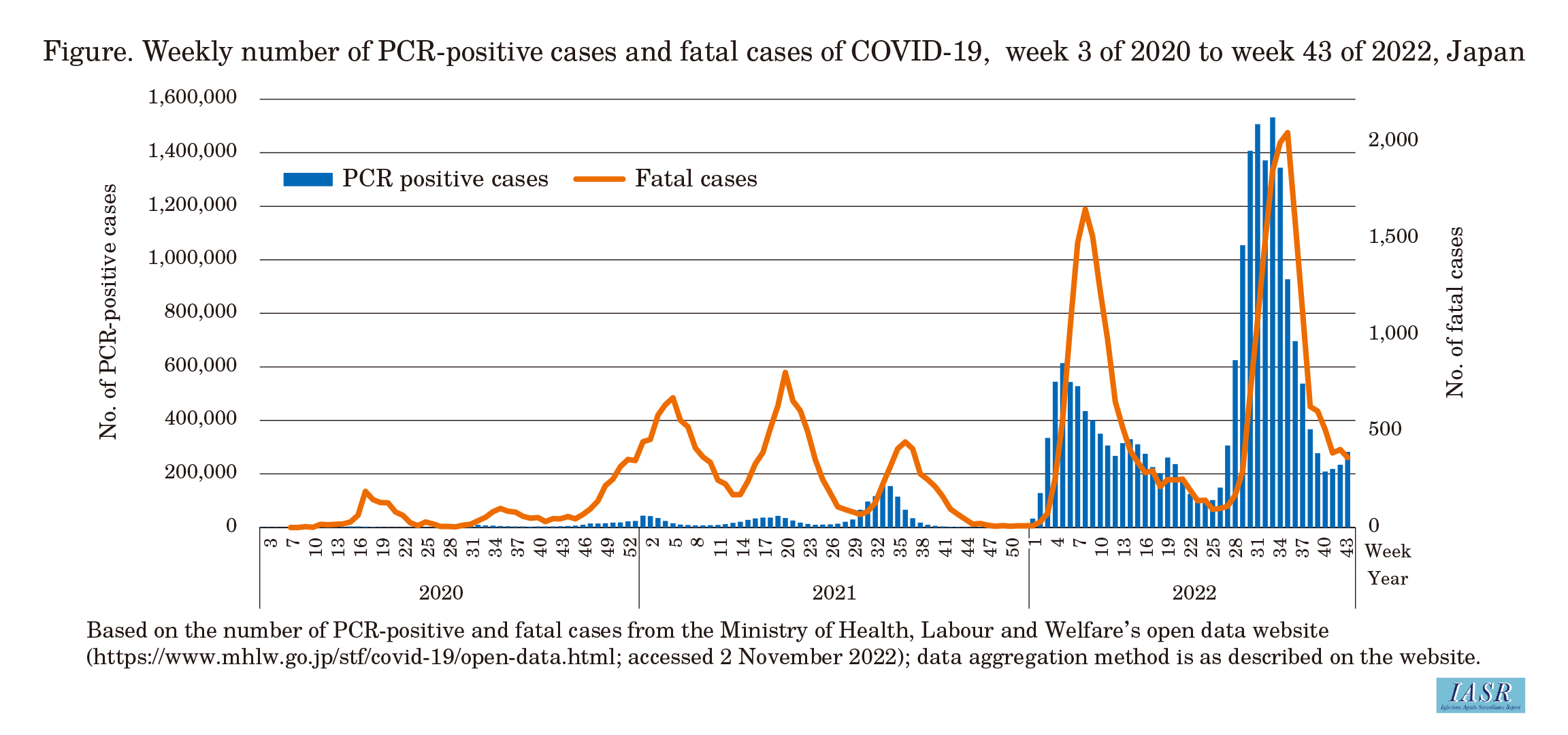
Monitoring of COVID-19 occurrence by the Ministry of Health, Labour and Welfare (preliminary data)
According to the domestic epidemiological surveillance data of COVID-19 (preliminary data as at 20 September 2022) (https://www.mhlw.go.jp/content/10906000/000992637.pdf) by the MHLW, the male/female ratio for the cumulative number of reported positive cases was 1.0; the respective proportional contribution of the positive cases by age group was as follows: those in their 20s (16.0%), followed by those in their 30s (15.5%), 40s (15.4%), 10s (13.8%), under 10 years (13.7%), 50s (10.6%), 60s (6.0%), 70s (4.3%), and 80s and older (4.1%). Compared to the update in May 2021 (IASR 42: 135-136, 2021), the previously observed disproportionately male distribution was no longer present, and those in their 10s and younger increased considerably. In particular, from 2022, the sex and age distributions greatly changed (see p.273 of this issue). Additionally, the cumulative age group-specific proportion of fatal cases among positive cases had decreased compared to that in May 2021, with the proportions as follows: those in their 80s and older (3.0%), 70s (0.9%), 60s (0.2%), and 50s and under (<0.1%).
Genomic surveillance and the emergence of variants of concern with increased infectivity/transmissibility or antigenic change
In Japan, genomic surveillance of SARS-CoV-2 has been conducted since the early stages of COVID-19 occurrence. The National Institute of Infectious Diseases (NIID), prefectural and municipal public health institutes, and quarantine stations have collaborated to analyze the viral genome; information from the viral genome has been utilized for cluster control and for monitoring, together with epidemiological information (see p.275 of this issue).
By the end of 2020, SARS-CoV-2 variants with genetic mutations that may affect features such as infectivity, transmissibility, virulence (severity of infection caused by the pathogen), or antigenicity, had emerged, and the replacement of circulating variants by those with growth advantages has been observed. In particular, the B.1.1.7 (Alpha), B.1.617.2 (Delta), and B.1.1.529 (Omicron) lineages have successively replaced each other to continue the epidemic. As for Omicron, replacement by subvariants has been observed, with many recombinants from different lineages having been observed. Several subvariants with indications of immune escape from neutralizing antibodies through vaccination and infection, or growth advantages that increase infections, have been reported worldwide. On the other hand, there is a tendency for mutations to concentrate at common sites, which has been suggested as convergent evolution of the virus.
As a countermeasure against these variants, Japan has been strengthening its genomic surveillance to assess and evaluate the situation (see p.276 of this issue). At quarantine stations, viral genomic analysis was conducted for all positive cases, and domestically, polymerase chain reaction (PCR), which can screen for mutations specific for each variant, was initially performed, with positive samples further analyzed for genomic sequence by prefectural and municipal public health institutes and NIID. Subsequently, each local government had established a system for genomic analysis targeting 5-10% of positive cases. After the Omicron epidemic, it became diff icult to sustain 5-10% of positive cases for genomic analysis, but at its peak, more than 5,000 viral genomes were registered per week nationwide. In addition, since March 2021, genomic analysis had been conducted targeting 400 samples per week (800 samples nationwide from April 2022), extracted from nationwide samples tested by two domestic commercial laboratories; with the establishment of a monitoring system for the occurrence of variants, the proportion of specific subvariants was routinely estimated.
Laboratory-based virological analyses for SARS-CoV-2 variant risk assessment
To plan effective public health countermeasures in response to the emergence of a novel variant, it is necessary to conduct a risk assessment based on features such as the virological characteristics of the variant. As obtaining the virological characteristics necessary for risk assessment solely from viral genome sequence information is diff icult, it is necessary to use isolated viruses for laboratory-based virological analyses to rapidly gather information on aspects such as virulence (see p.278 of this issue) and susceptibility to drugs/neutralizing antibodies (see p.279 of this issue). Such analyses can only be conducted at a research unit equipped with appropriate laboratory facilities, having advanced knowledge and technical skills; notwithstanding, during the pandemic, research on SARS-CoV-2 has been actively pursued continuously at virology laboratories worldwide, with the results being rapidly disseminated and utilized as the core information for variant risk assessment. However, much information has been published as pre-peer-reviewed preprints, with varying outcomes being reported due to variations in laboratory environments, materials, and experimental systems, necessitating cautious interpretation of the information.
Monitoring of COVID-19
It is diff icult to predict the trend of COVID-19 occurrence, and continued monitoring is imperative. As a fundamental monitoring strategy, surveillance of the trends in COVID-19 occurrence will continue to be necessary. The monitoring scheme is expected to change over time in accordance with the epidemic situation and risk assessment, and surveillance using multiple indicators and multiple data sources will continue to be important (see p.280 of this issue). In addition to trends in the number of newly positive cases, by incorporating complementary information such as syndromic surveillance (e.g., fever hotline calls, which reflect community transmission levels including potentially undetected infections) (see p.282 of this issue) and monitoring the number of tests and test positivity stratified by reason for testing (see p.284 of this issue), more confident interpretations can be made for a robust surveillance strategy. In addition, during the COVID-19 pandemic, data on human mobility, people's anxiety levels, and risk behaviors acted as proxy indicators for SARS-CoV-2 exposure opportunities at the population level, supporting situational awareness (see p.285 of this issue).
To monitor SARS-CoV-2 variants, it is necessary to continue virological and epidemiological assessments on aspects such as infectivity, transmissibility, and phenotypic expression of the variant (e.g., pathogenicity and antigenicity), and to implement measures according to the risk assessment. From the laboratory side, NIID has contributed to the advancement of virological analysis research not only by isolating and culturing new variants found through genomic surveillance and using them at NIID, but also by rapidly sharing them with domestic and overseas research institutions; such coordination will continue to be important. However, with the dissemination of SARS-CoV-2 research findings decreasing worldwide, there is concern that obtaining information on the virological properties of newly emergent variants may become diff icult in the future.
Lastly, when a new variant of concern emerges, it is important to conduct active epidemiological investigations in a timely manner to clarify the epidemiological characteristics and link them to public health response and countermeasures (see p.286 of this issue). In addition, separate from routine surveillance, consideration of special studies (e.g., the first few hundred studies) that focus on the first few hundred cases regarding clinical, epidemiological, and virological aspects are also necessary in the early phase when a new variant emerges (see p.288 of this issue). In fact, such a strategy that enables the rapid collection of detailed information at the early stage of emergence is important for any novel emerging infectious disease that may occur in the future.