


IASR 47(2), 2026【THE TOPIC OF THIS MONTH】Penicillin-resistant Streptococcus pneumoniae (PRSP) infections in Japan, April 1999 to December 2024
PDF download(PDF:452KB)
The topic of This Month Vol.47 No.2(No. 552)
Penicillin-resistant Streptococcus pneumoniae (PRSP) infections in Japan, April 1999 to December 2024
(IASR Vol. 47 p23-24: February 2026)
Introduction
Streptococcus pneumoniae is a Gram-positive diplococcus and causes invasive pneumococcal diseases (IPD), such as meningitis, bacteremia, and pleuritis, as well as non-IPD, such as pneumonia and otitis media, in humans. Furthermore, some healthy individuals carry S. pneumoniae in their pharynx. To prevent IPD, 15-valent or 20-valent pneumococcal conjugate vaccines (pneumococcal conjugate vaccine: PCV) are currently used in routine immunization for children in Japan. Adults can also receive these vaccines on a voluntary basis (see p.26 of this issue). Adults and children aged ≥2 years can also receive the 23-valent pneumococcal capsular polysaccharide vaccine (pneumococcal polysaccharide vaccine: PPSV23). In addition, in August 2025, the 21-valent PCV (PCV21) was approved for adults in Japan.
Penicillin is a key drug in the treatment of pneumococcal infections. S. pneumoniae has six types of penicillin-binding proteins (PBPs), among which PBP1A, PBP2B, and PBP2X are involved in resistance to β-lactam antimicrobials including penicillin (see p.34 of this issue). S. pneumoniae is known to undergo genetic recombination (natural transformation) between strains of the same species or with closely related species such as Streptococcus mitis / Streptococcus oralis. This genetic recombination is one of the factors that generate penicillin-resistant S. pneumoniae (PRSP).
PRSP infection is reported through designated sentinel sites (hospitals with 300 or more beds) as a Category V Infectious Disease under the Infectious Diseases Control Law. When a physician at a designated sentinel site diagnoses this infectious disease, the administrator of the facility is obligated to submit a report to the jurisdictional public health center. Because there was a change in the reporting criteria in April 2025, this article reports on the summary and the status of notifications of PRSP infection in Japan prior to the revision.
Revision of the reporting criteria for penicillin-resistant Streptococcus pneumoniae infection
From 7 April 2025, the reporting criteria for PRSP infection at designated sentinel sites were revised. With this revision, the previously used criteria based on oxacillin susceptibility were abolished, and the criteria were unified to those based on penicillin susceptibility (see p.25 of this issue). In addition, prior to the revision, the criterion of penicillin minimum inhibitory concentration (MIC) ≥0.125 μg/mL was applied even to pneumococcal isolates identified as the causative bacteria from specimens that are not normally sterile, such as sputum, pus, and urine; however, with this revision, for isolates derived from specimens that are not normally sterile, the criterion was changed to MIC ≥4 μg/mL.
Clinical and Laboratory Standards Institute (CLSI) breakpoints are widely used as cutoff values to classify bacteria as susceptible or resistant based on antimicrobial susceptibility testing results (MIC values or inhibition zone diameters). In CLSI breakpoints, resistance criteria differ between meningitis isolates and non-meningitis isolates among isolates derived from IPD. This differs from the Japanese reporting criteria described above, which uniformly handle isolates derived from sterile specimens, including cerebrospinal fluid. Readers should note that the definition of PRSP differs across articles in this issue as well.
Occurrence of PRSP infections in Japan based on the National Epidemiological Surveillance of Infectious Diseases
Since the 2000s, the number of reports of PRSP infections has shown a decreasing trend, and it further decreased during the coronavirus disease 2019 (COVID-19) pandemic (Fig. 1 on p.23). In addition, before 2010, more than half of the notifications were among patients aged ≤14 years, whereas currently nearly half are among patients aged ≥65 years (Fig. 2).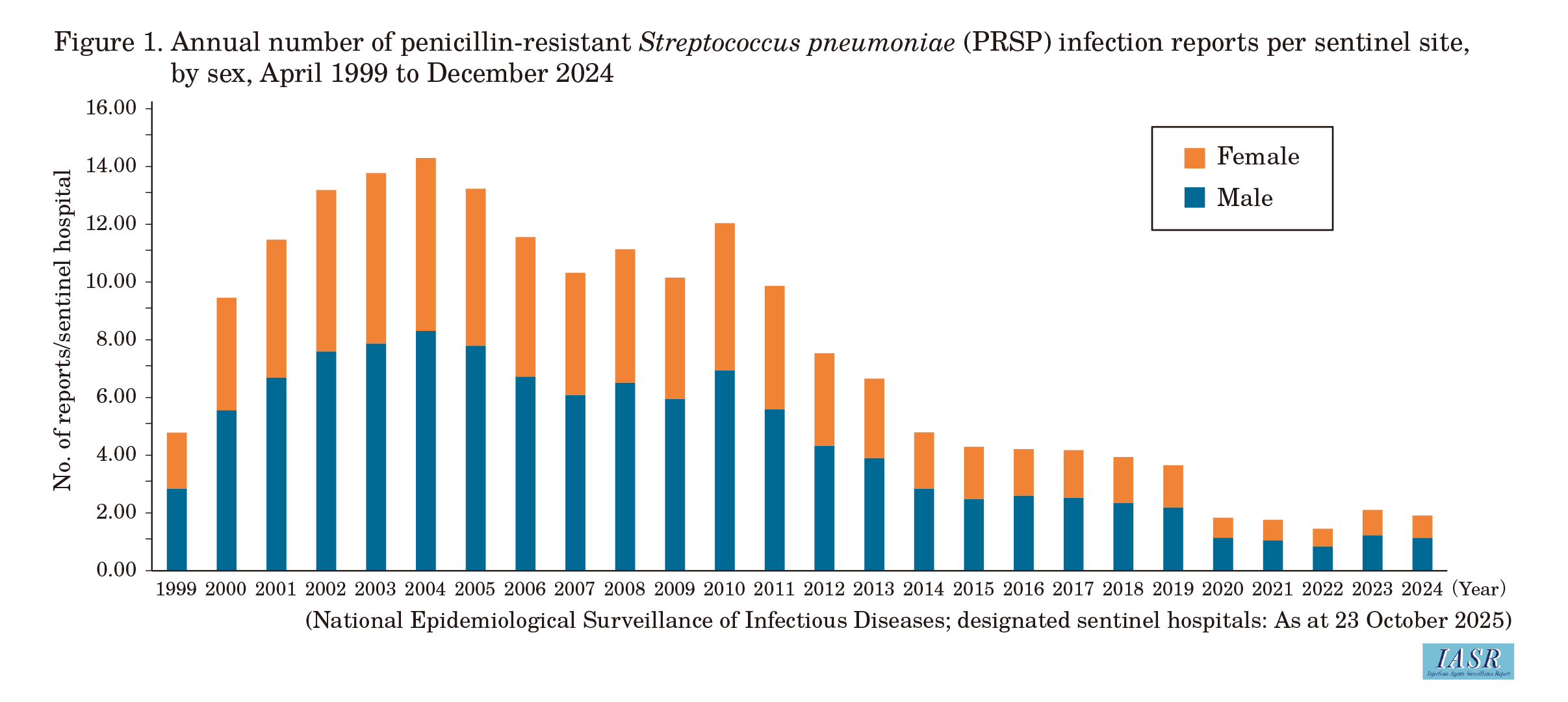
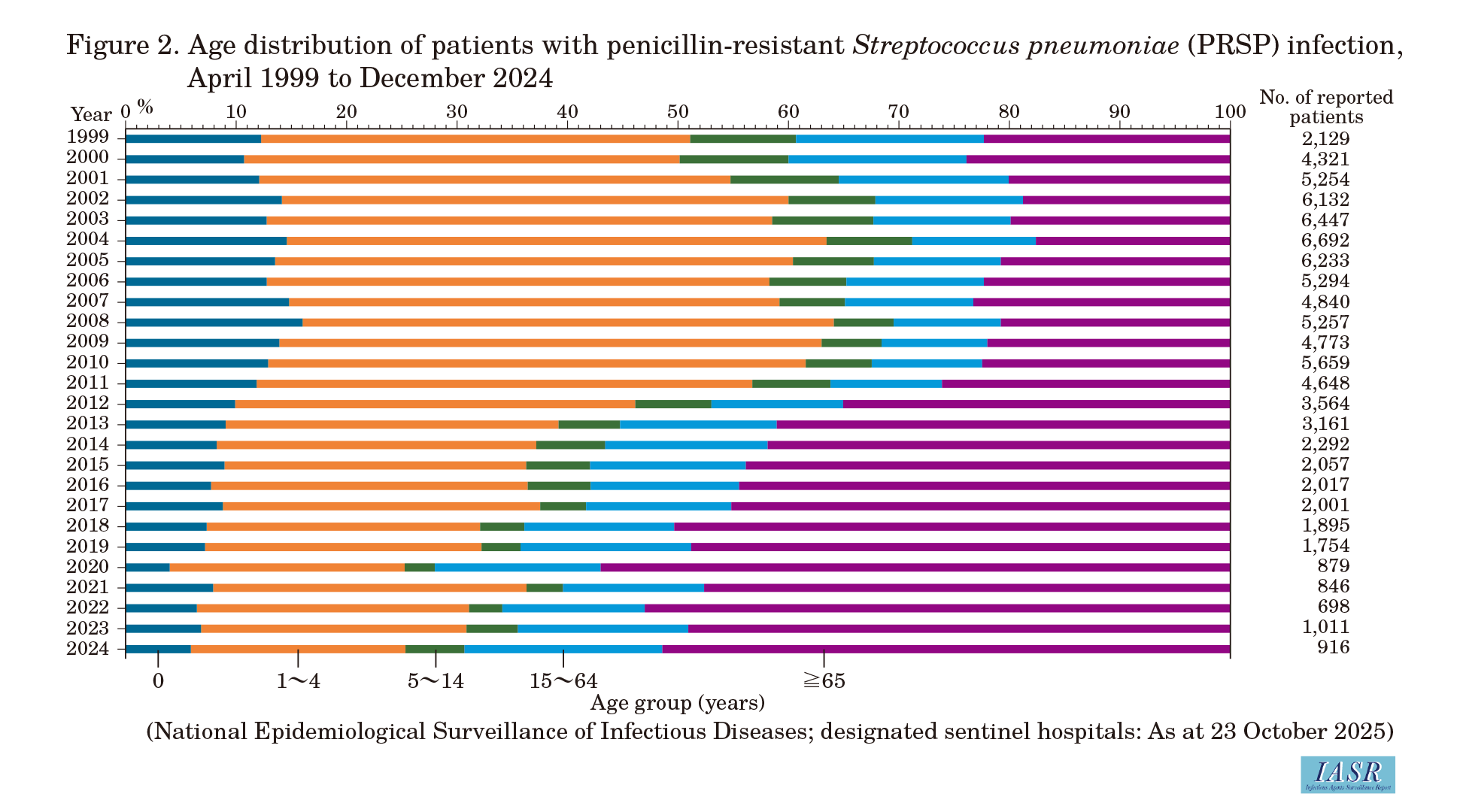
The dissemination of PCV exerts selective pressure on pneumococcal populations and alters their serotype distribution. Because serotype distribution and PRSP epidemiology (resistance rates and predominant serotypes, etc.) are closely related, PRSP epidemiology also changes with the dissemination of PCV. Therefore, it should be noted that PRSP epidemiology is influenced not only by antimicrobial use in society but also by the types of pneumococcal vaccines used in the area and the vaccination coverage there.
Current status of PRSP in Japan based on JANIS data
The Japan Nosocomial Infections Surveillance (JANIS) collects comprehensive information on antimicrobial resistance of S. pneumoniae detected in Japan. When JANIS data are interpreted using the reporting criteria revised in April 2025, penicillin resistance rates increased across all age groups from 2018 to 2023 in both blood-derived isolates (2018: 25.7%; 2023: 36.2%) and cerebrospinal fluid-derived isolates (2018: 31.8%; 2023: 50.9%) (see p.28 of this issue).
PRSP in adult IPD in Japan
In addition to sentinel surveillance under the Infectious Diseases Control Law, epidemiological studies on adult IPD conducted as part of the Ministry of Health, Labour and Welfare research project, “The enhanced adult invasive pneumococcal disease surveillance study” have provided important information on PRSP detected from adult IPD cases in Japan. While this study uses resistance criteria compliant with CLSI, among adult (aged ≥15 years) IPD-derived isolates collected during 2013-2024, the penicillin resistance rate (MIC ≥0.125 μg/mL) among meningitis-derived isolates (n= 403) was 38.5%. In contrast, among non-meningitis-derived isolates (n=2,624), the penicillin reduced susceptibility rate (MIC = 4 μg/mL) was 0.9%, and the penicillin resistance rate (MIC ≥8 μg/mL) was 0.5% (see p.30 of this issue).
PRSP in pediatric IPD in Japan
Suga et al. have continuously conducted active surveillance of pediatric (aged <15 years) IPD since 2008 (see p.31 of this issue). According to reports from this research group, among isolates registered from 2008 through March 2024, the penicillin resistance rate among meningitis-derived isolates (n=209) was 49.8%, the penicillin reduced susceptibility rate in non-meningitis-derived isolates (n=1,511) was 1.3%, and the penicillin resistance rate in non-meningitis-derived isolates was 0%. In addition, among meningitis-derived isolates, the resistance rate was 65.3% before the introduction of PCV7 (2008 to January 2010), whereas it was 39.6% from November 2013 onward after the introduction of PCV7 and PCV13. This decrease is considered to be attributable to the fact that PCV7 and PCV13 covered serotypes 6B, 23F, 19F, 14, and 19A, which were the predominant serotypes among PRSP at that time.
PRSP clones circulating in Japan
In Japan, 19A-ST3111 and 15A-ST63 were predominant PRSP clones around the period before and after the introduction of PCV7 (see pp.34 and 35 of this issue); however, after serotype 19A became covered by PCV13, 19A-ST3111 is now rarely detected. In addition, since the introduction of PCV13, 35B-ST558 has gradually increased. Recently, 35B-ST156 has been appearing (see p.36 of this issue), and attention should be paid to its trends.
Summary
The number of PRSP infection reports has decreased since peaking around 2004; however, in recent years, resistance rates have been increasing. Although the number of IPD cases itself decreased since 2020 in association with the COVID-19 pandemic, if IPD increases in the future, there is a concern that IPD caused by PRSP will also increase. Attention is warranted regarding how dissemination of each PCV vaccine, in pediatric and adult populations in Japan, will affect increases and decreases of PRSP clones and the emergence of new clones.