


IASR 47(4), 2026【THE TOPIC OF THIS MONTH】Rubella and congenital rubella syndrome in Japan, as at February 2026
PDF download(PDF:702KB)
The topic of This Month Vol.47 No.4(No. 554)
Rubella and congenital rubella syndrome in Japan, as at February 2026
(IASR Vol. 47 p59-61: April 2026)
Rubella is an acute infectious disease caused by the rubella virus, and is characterized by fever, rash, and lymphadenopathy. Rubella virus infection during pregnancy may result in stillbirth, miscarriage, or congenital rubella syndrome (CRS), which presents with various manifestations in the child, including congenital heart disease, hearing impairment, and cataracts. Although no specific treatment exists for rubella or CRS, prevention is possible using rubella-containing vaccines (RCV), and measures toward rubella elimination are being promoted in each country, led by the World Health Organization (WHO) (see p.61 of this issue). The definition of rubella elimination is “the absence of endemic rubella virus transmission in a defined geographical area (e.g. region or country) for >12 months and the absence of CRS cases associated with endemic transmission in the presence of a well-performing surveillance system”. Furthermore, certification of elimination requires the demonstration of “ no transmission of endemic virus for at least 36 months since the last endemic case”, “ the existence of a surveillance system that meets verification standards ”, and “ virological evidence demonstrating the absence of endemic virus transmission”. In Japan, the Ministry of Health, Labour and Welfare (MHLW) formulated the “Guidelines on Prevention of Specified Infectious Diseases for Rubella” in 2014, setting the goal of achieving rubella elimination by fiscal year (FY) 2020 and establishing the direction of measures to build a system that meets the verification criteria. Furthermore, as an additional measure for rubella, routine immunization (fifth stage) was implemented during FY2019-FY2024, targeting men born between 2 April 1962 and 1 April 1979, who had no previous opportunity to receive routine rubella vaccination and had particularly low seroprevalence. Through continuous efforts, including these measures, rubella elimination in Japan was newly certified in September 2025 by the Regional Verification Commission for Measles and Rubella Elimination in the Western Pacific (see p.62 of this issue).
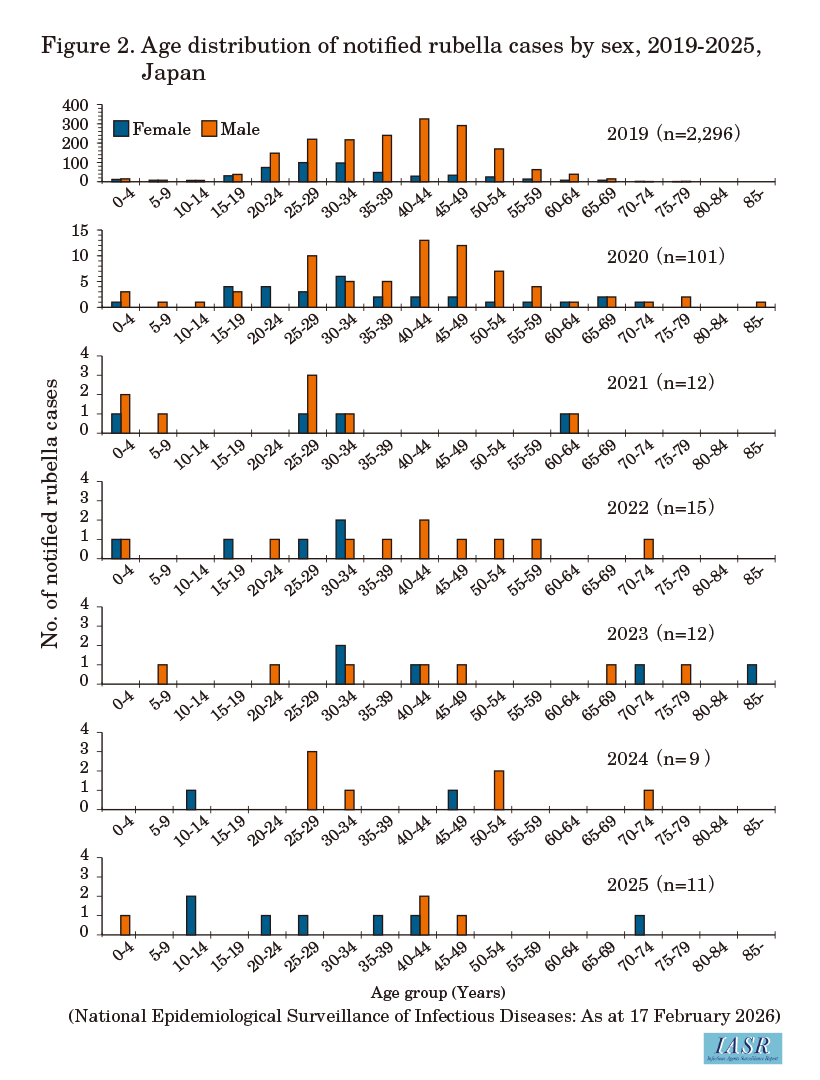
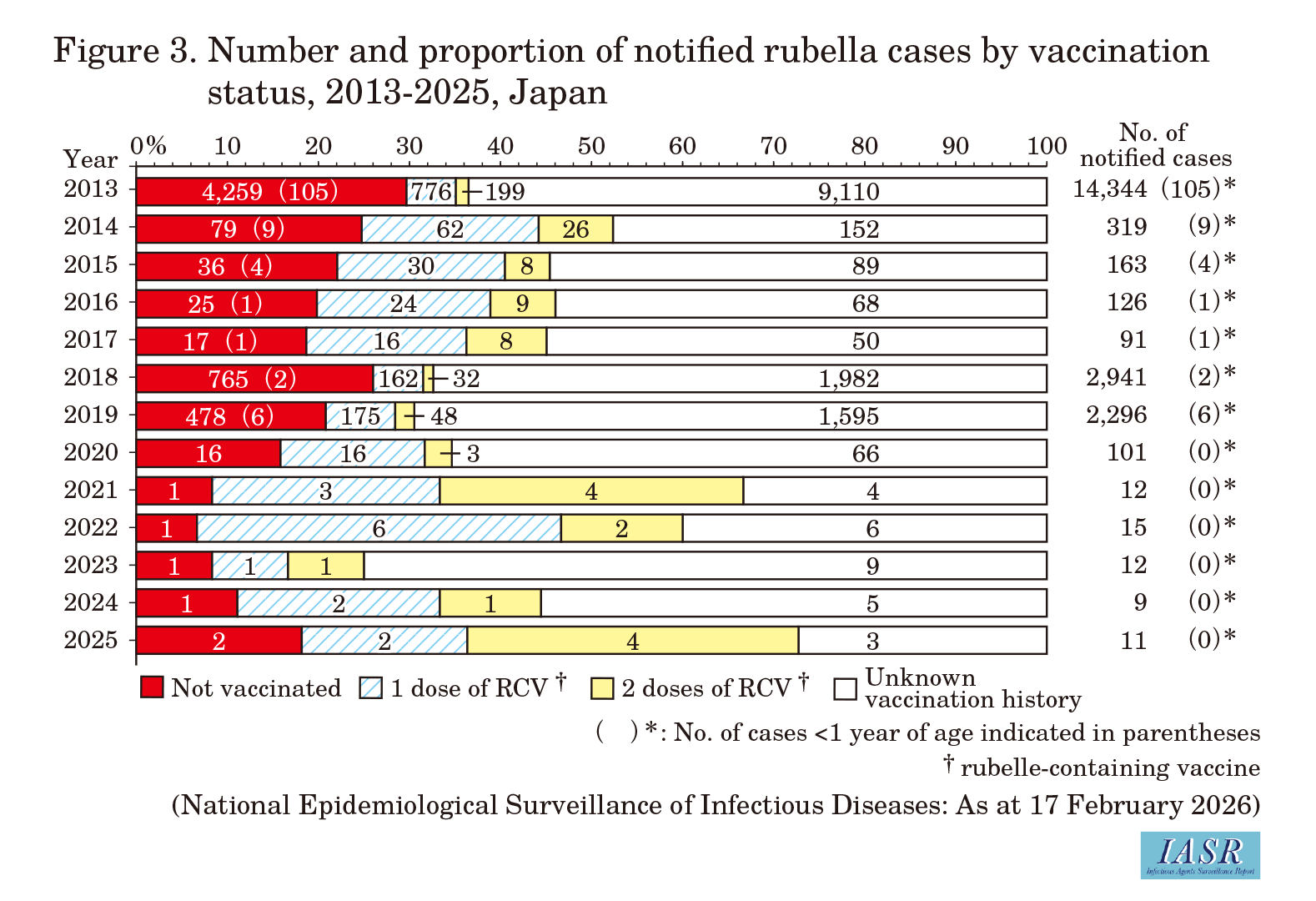
National Epidemiological Surveillance of Infectious Diseases: Rubella is a Category V Infectious Disease and is subject to notifiable disease surveillance under the Infectious Diseases Control Law (https://www.mhlw.go.jp/bunya/kenkou/kekkaku-kansenshou11/01-05-14-02.html). In 2013, 14,344 cases were reported, and epidemics occurred in 2018 and 2019 with more than 2,000 cases notified annually (Fig. 1 on p.59). Since 2020, the number of notified cases has remained low, particularly during 2021-2025, when the annual number remained at 9-15 cases. In 2019, when the number of notified cases was high, individuals aged ≥20 years accounted for approximately 94% of cases, and notifications were particularly frequent among men, mainly in their 40s (Fig. 2 on p.59). Regarding the proportion of rubella cases by vaccination history, especially during the nationwide epidemics in 2013 and 2018-2019, excluding those with unknown vaccination history, the proportion with “no vaccination history” (21-30% overall) was high, whereas the proportions with “one dose” (5-8% overall) and “two doses” (1-2% overall) were low (Fig. 3). During periods with fewer rubella cases (2014-2017 and 2021-2025), these characteristics in the sex-age distribution and vaccination history were not clearly observed.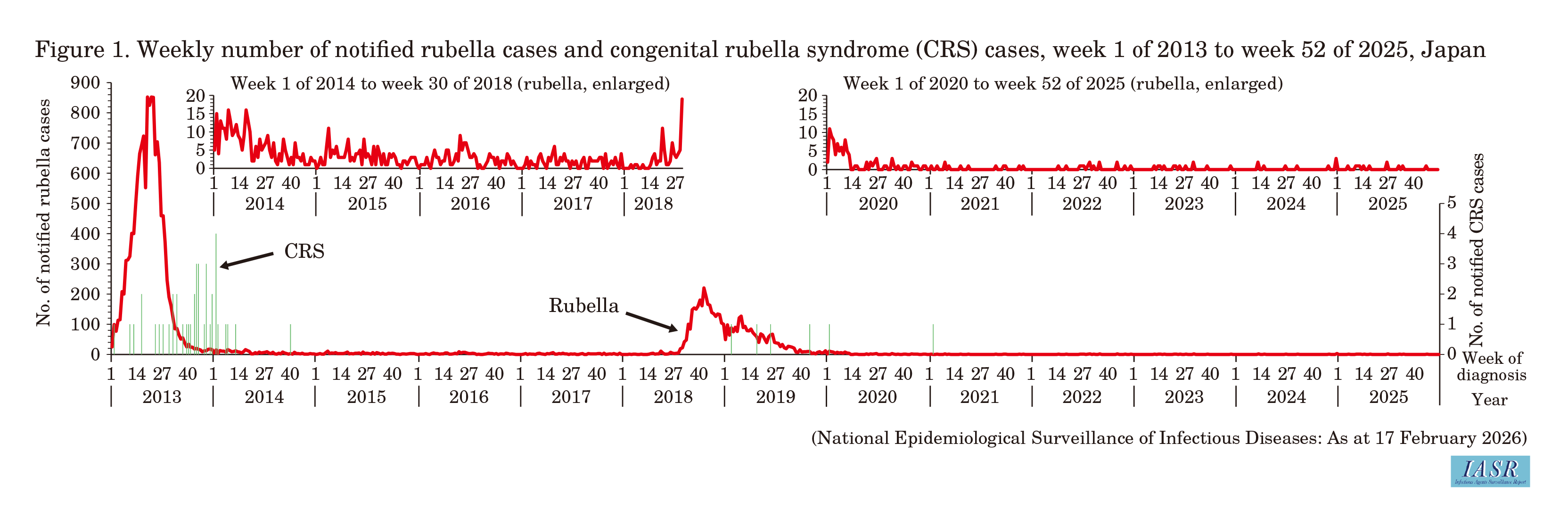
CRS is also a Category V Infectious Disease and is subject to notifiable disease surveillance under the Infectious Diseases Control Law (https://www.mhlw.go.jp/bunya/kenkou/kekkaku-kansenshou11/01-05-10.html). With rubella epidemics, the number of notified CRS cases increased, with 45 cases reported during 2012-2014 and six cases during 2019-2021; however, no cases have been reported since week 3 of 2021 (Fig. 1 on p.59).
Laboratory testing for rubella: Since 2018, in principle, serologic and viral genetic testing are required for all rubella cases, and since then the proportion of notifications based on laboratory confirmation cases has been increasing (Fig. 4). Various efforts have been made to ensure quality control of testing, and for tests conducted at Public Health Institutes and other facilities for detection of measles and rubella virus genes, a method to simultaneously detect human-derived nucleic acids as an endogenous control has been developed and can be used for internal quality control (see p.63 of this issue). In addition, the MHLW has implemented an external quality control program for government testing facilities conducting administrative testing under the Infectious Diseases Control Law, with the aim of ensuring reliability of testing by providing opportunities for external quality assessment and promoting quality assurance through evaluation and feedback of results. In FY2025, external quality control for the analysis of viral gene sequences and genotyping of measles and rubella viruses was conducted, with participation from 75 facilities (see p.65 of this issue).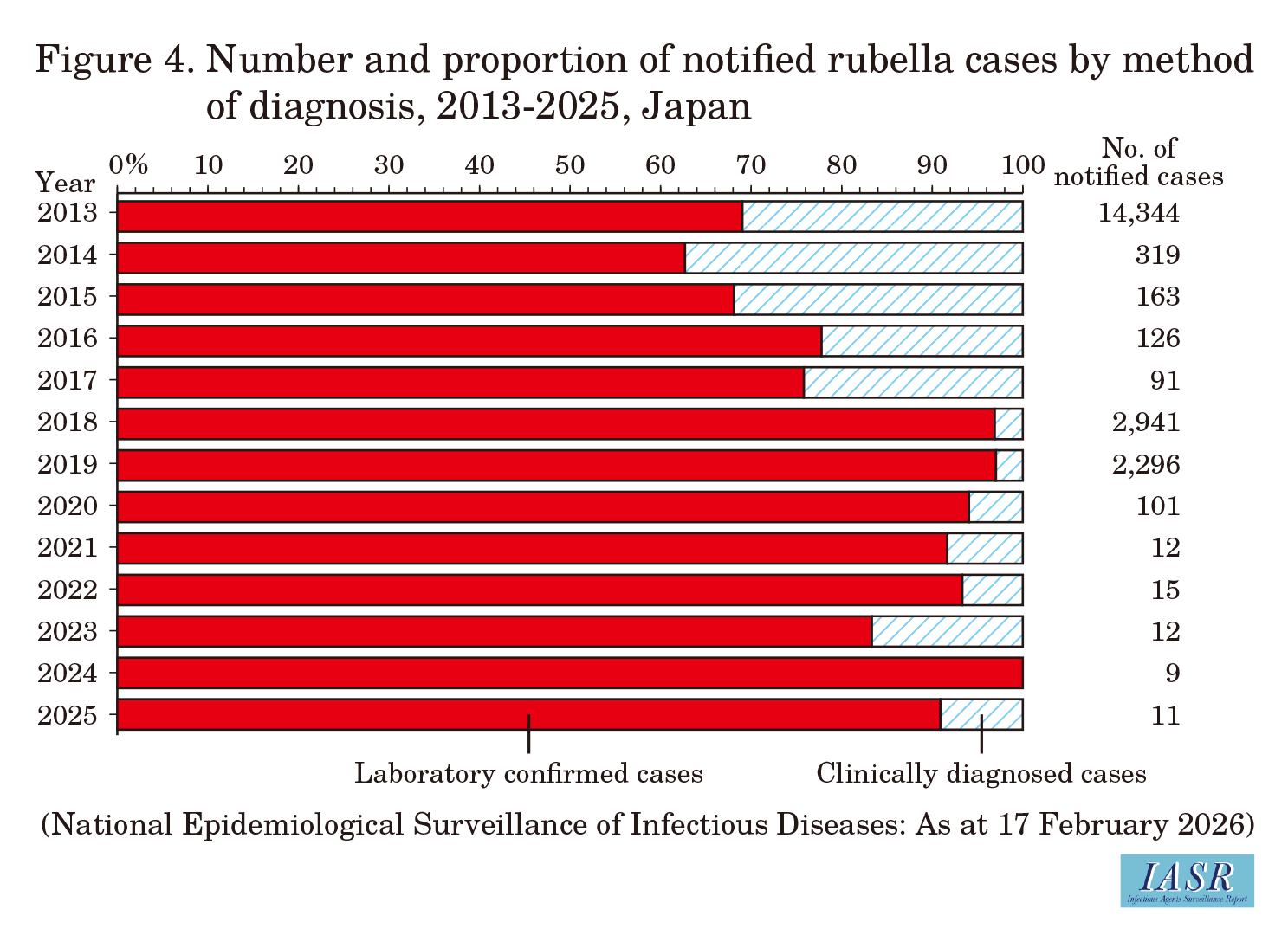
Vaccination coverage surveys and the National Epidemiological Surveillance of Vaccine-Preventable Diseases: Since FY2006, routine rubella vaccination (first and second stages) has been implemented for children aged 1 year and for children in the year before entering elementary school. According to nationwide vaccination coverage surveys of RCV conducted annually, a decreasing trend in vaccination coverage has been observed since FY2020 (see p.66 of this issue). In FY2024, the vaccination coverage was 92.7% for the first stage and 91.0% for the second stage, both showing further decreases from the previous fiscal year. The number of individuals eligible for the fifth stage was 15,374,162 at the start of FY2019. Of these, by March 2025, 5,043,900 individuals (32.8% of the target population) had undergone antibody testing, and 1,090,292 individuals (7.1% of the target population) had received vaccination.
The rubella susceptibility survey in the National Epidemiological Surveillance of Vaccine-Preventable Diseases was conducted in FY2025 among 4,148 individuals in 15 prefectures (Fig. 5 on p.61). The seroprevalence of rubella HI antibody titers ≥1:8 was generally ≥90% among those aged or in age group ≥2 years (see p.68 of this issue). Among men eligible for the fifth stage vaccination, seroprevalence remained around 80% in surveys conducted during FY2016-FY2020, but increased to the high 80% range in surveys during FY2021-FY2025. Although this remained lower than that among women of the same age group, the gap has narrowed.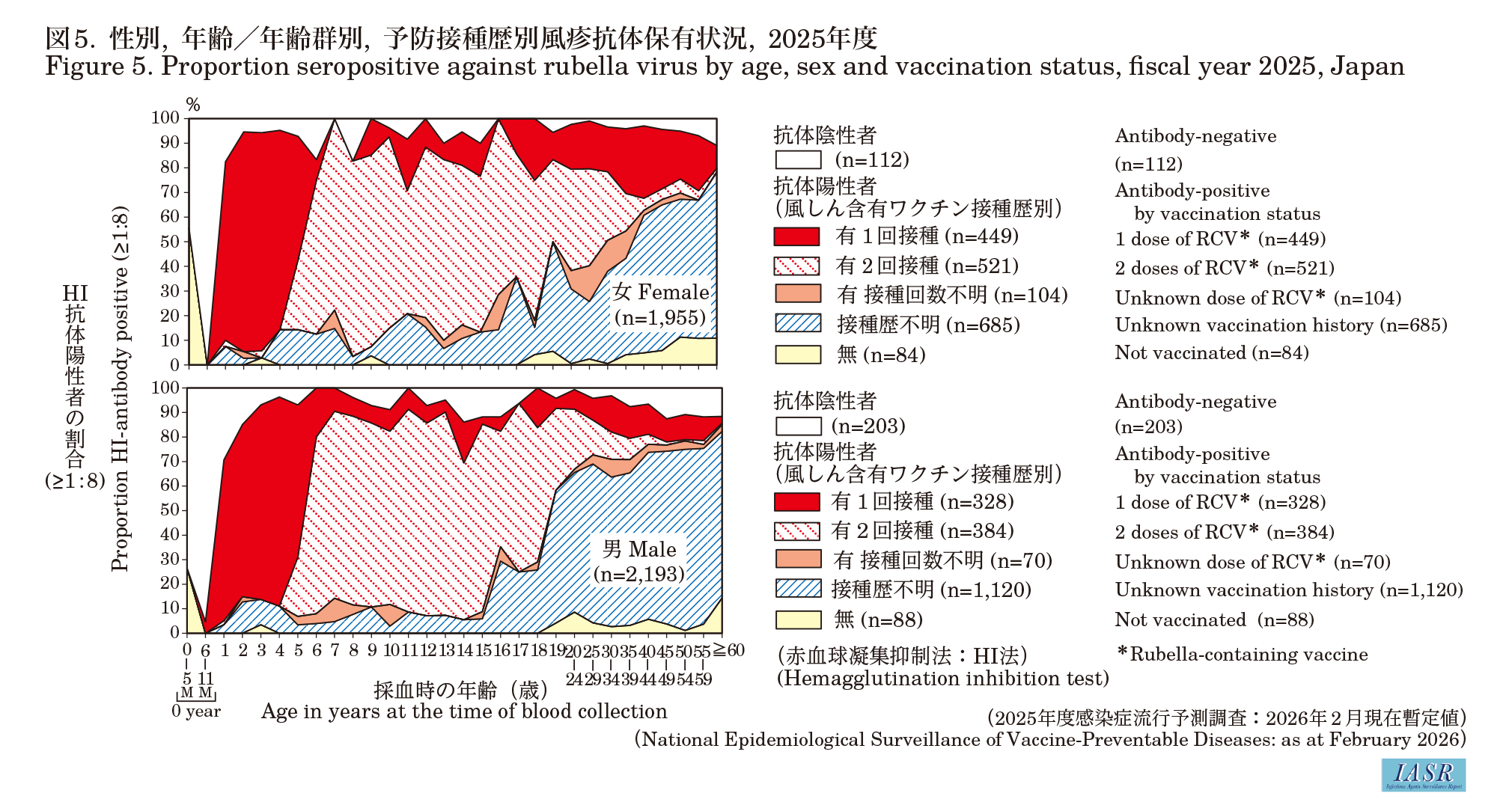
Future challenges: In 2025, rubella elimination in Japan was internationally verified. This achievement reflects the efforts of many stakeholders, including those in government, healthcare, education, childcare, patient groups / associations, and the business sector (see p.70 of this issue), and going forward, it is required to maintain this status. Overseas, particularly in the African Region, many countries still have insuff icient rubella control measures, such as not having introduced RCV into routine immunization. It is important to prevent the re-establishment of transmission in Japan in the event of rubella importation, and continued maintenance and strengthening of vaccination, surveillance, and outbreak response are required. In recent years, a decline in vaccination coverage of RCV among children has been pointed out, and addressing this issue is an urgent priority. As one of the measures, based on the revision of the Immunization Act in 2022, discussions are currently underway regarding the digitalization of the administrative paperwork required for immunization and the development and utilization of a vaccination database; it is expected that a system will be established in which vaccinations can be delivered eff iciently and with public confidence (see p.71 of this issue).