


IASR 47(6), 2026【THE TOPIC OF THIS MONTH】Emergency preparedness and response for infectious diseases in Japan
PDF download(PDF:484KB)
The topic of This Month Vol.47 No.6(No. 556)
Emergency preparedness and response for infectious diseases in Japan
(IASR Vol. 47 p103-104: June 2026)
Components of emergency management activities
When the term “emergency preparedness and response” is used, attention tends to focus only on response activities during an emergency. In reality, however, the majority of emergency management activities are devoted to preparedness before an event occurs (Fig. 1).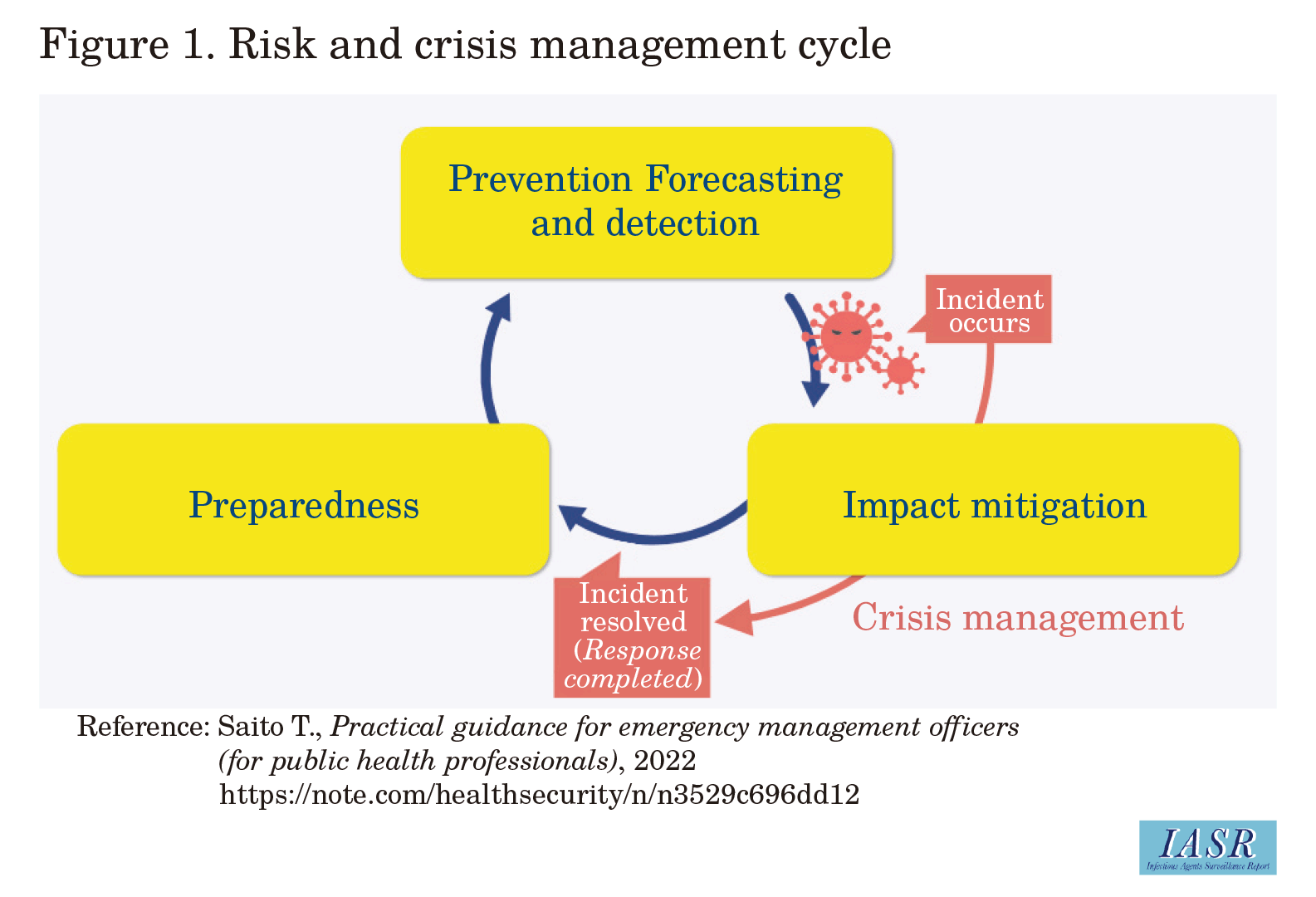
Activities related to emergency management are generally classified as follows: intelligence activities, which involve collection and analysis of information related to threats; logistics, which involves securing and coordinating the deployment of personnel, equipment, and supplies needed to implement countermeasures; security measures, which aim to enhance the resilience of legal and governance systems designed to prevent crises; and risk communication, which is the process of discussing issues with relevant organizations, the general public, and stakeholders, building consensus, and translating these into policy (Fig. 2).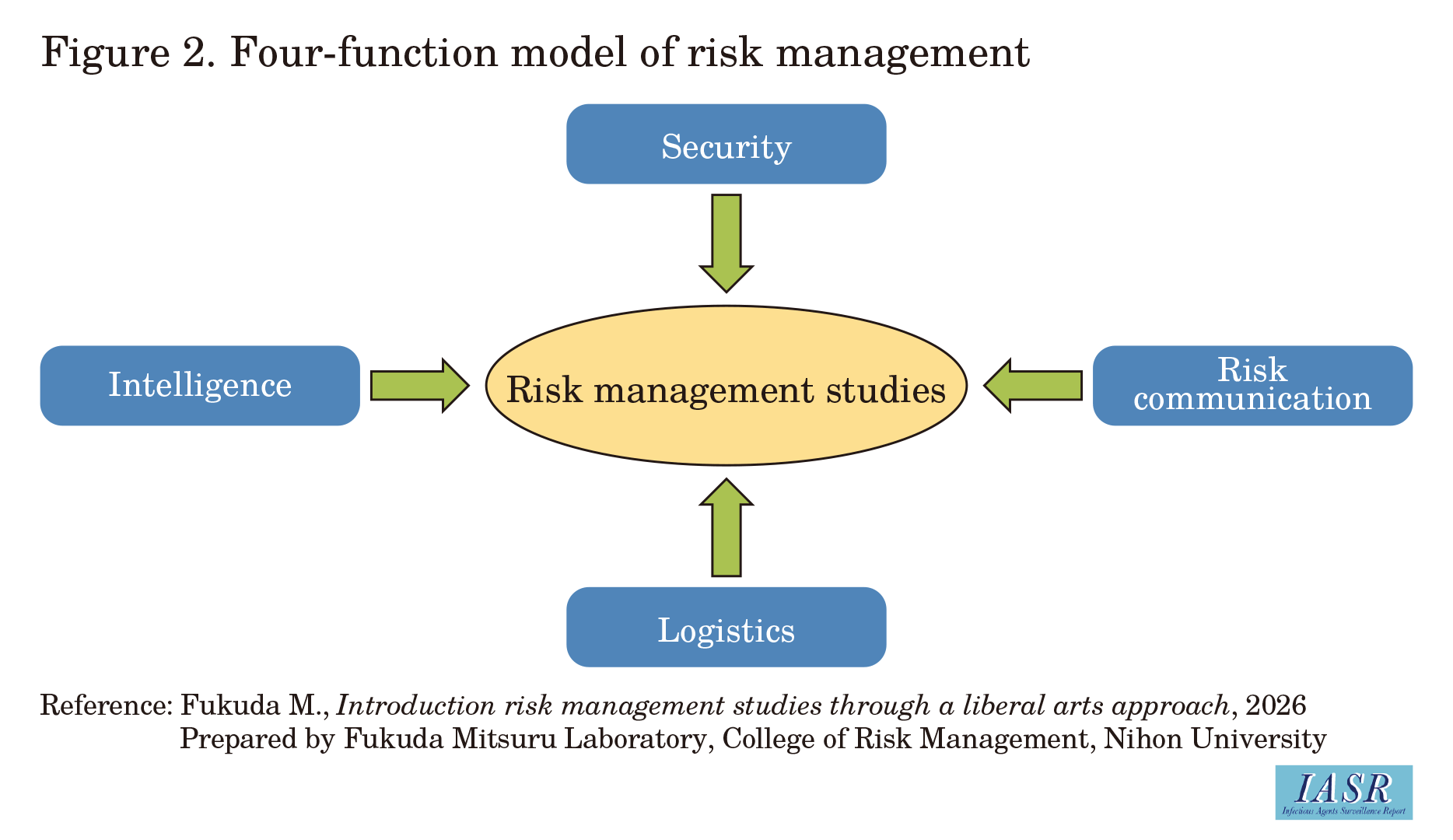
Unlike natural disasters such as earthquakes or floods, infectious disease emergencies are characterized by the fact that, at the time of initial detection, the affected areas and populations are often unknown. While the disease characteristics and transmission route are being identified, the infection may continue to spread, potentially leading to a greater health impact; it is thus necessary to promptly collect domestic and international evidence, conduct active epidemiological investigations, and aggregate and share the latest information among relevant stakeholders. Accordingly, intelligence activities, analysis of epidemiologic information, and clinical research, which form the foundation of these efforts, are important components of preparedness.
In addition, to mitigate the impact of infectious disease outbreaks, public health interventions (PHI) and medical interventions using medical countermeasures (MCM) serve as two complementary pillars.
To implement these measures as rapidly as possible when a pandemic occurs, PHI require risk communication based on scientific expertise. Meanwhile, for MCM-based medical interventions, establishing a diagnostic testing system — spanning from specimen collection and pathogen isolation/identification to clinical trials — as well as frameworks for the development of therapeutics and vaccines are required.
This issue focuses on the current status of preparedness activities in infectious disease emergency management.
Establishment of the Japan Institute for Health Security (JIHS) and strengthening of emergency management systems
Based on the experience of coronavirus disease 2019 (COVID-19), new emergency management organizations were established in Japan: the Cabinet Agency for Infectious Disease Crisis Management (CAICM) was created within the Cabinet Secretariat, and the Department of Infectious Disease Prevention and Control was set up within the Ministry of Health, Labour and Welfare (MHLW). In addition, to fundamentally strengthen health emergency management and research and development functions, the National Institute of Infectious Diseases (NIID) and the National Center for Global Health and Medicine were integrated in April 2025 to establish JIHS.
A “Coordinating Division” has been established within JIHS to provide a mechanism for cross-organizational collaboration and coordination among its various operational organizations. One of the bureaus within the Control Bureau, the Bureau of Health Security and Management, is responsible for overall coordination of health emergency management.
As part of preparedness activities undertaken by JIHS, this issue reports on the development of the general section of the JIHS Business Continuity Plan (BCP) by the Control Bureau, the development of specific plans (e.g., Natural Disaster Section, Pandemic Section) by each operational organization, and the preparation of a surge capacity roster to secure personnel required for the initial response during approximately the first month following the onset of a pandemic (see p.103 of this issue).
Before the establishment of JIHS, the Center for Emergency Preparedness and Response (CEPR) was established at NIID in April 2020 by separating crisis management functions from the Infectious Disease Surveillance Center as part of efforts to strengthen NIID’s emergency management system. Thereafter, through March 2025, institution-wide responses were coordinated for unexpected infectious disease events and situations anticipated to pose substantial risks, including activation of its Emergency Operation Center (EOC) within NIID on eight occasions.
Following the establishment of JIHS, NIID became one of its operational organizations, and CEPR now operates through two departments and four off ices, carrying out activities such as intelligence gathering, communication and community engagement, support for training and exercises, and workforce development. Among these preparedness activities, this issue reports on the preparation of the “JIHS Infectious Disease Event-Based Surveillance (EBS) Weekly Report,” which is conducted as part of routine intelligence activities, and on the “ MHLW Infectious Disease Countermeasures Information-Sharing Meeting ” (see p.104 of this issue).
In the 2024 revision of the National Action Plan for Pandemic Influenza and Other Emerging Infectious Diseases (the National Action Plan) and its associated guidelines, the section on “Information Sharing and Risk Communication” was updated to clarify approaches to risk communication, including measures to prevent stigma and discrimination and to address misinformation and disinformation. The revision also emphasized the importance of two-way communication with affected individuals and communities, rather than one-way dissemination of information. This issue reports on communication activities related to these developments (see p.105 of this issue) and on the newly developed “JIHS Infectious Disease Risk Communication Guidelines” (see p.106 of this issue).
Preparedness for pathogen testing and public health institutes
For diagnostic testing of diseases classified as Novel Influenza Infection, etc. under the Infectious Diseases Control Act, the National Action Plan prior to its revision stipulated that diagnostic testing systems developed by NIID would be transferred to public health institutes, enabling them to conduct diagnostic testing under the Infectious Diseases Control Act (hereafter referred to as “administrative testing ”). During the COVID-19 pandemic, the number of positive cases exceeded 100 per day, making it impossible for public health institutes alone to sustain administrative testing, and testing was therefore outsourced to commercial laboratories. Recognizing that similar circumstances may arise during future pandemics, NIID has implemented the “Initial Training Program for Establishment of Pathogen Testing Systems.” Under this program, testing systems for hypothetical emerging infectious diseases are transferred to local governments, and training is conducted to ensure that public health institutes can rapidly build initial testing capacity and that commercial laboratories with agreements in place with local governments can conduct testing in the early stages of an outbreak (see p.108 of this issue).
Public health institutes, which serve at the forefront of initial testing responses in local governments, were designated as one of the core institutions of the health emergency management system in the Basic Guidelines for the Promotion of Community Health Measures following revision of the Community Health Act in 2022. As a result, prefectures and other local authorities are required to secure and develop human resources necessary for specialized research and testing and to establish facilities and equipment required for such activities. This issue describes developments in public health institutes since the emergence of COVID-19, strengthening of their emergency management systems, and the establishment of networks with NIID and related organizations (see p.109 of this issue).
Establishing a research and development environment for MCM
To enable early implementation of medical interventions using MCM during a pandemic, it is essential to promote clinical research based on actual patient data. To establish this foundation, JIHS has launched the Infectious disease Clinical Research netwOrk With National repository (iCROWN) project, which seeks to establish a network centered on designated medical institutions for specified infectious diseases, where patients are likely to be hospitalized during the early stages of a pandemic. The project aims to establish a system that enables collaborative research during peacetime and rapid implementation of clinical trials for therapeutics and other interventions during infectious disease emergencies. Further details are provided in a separate report in this issue (see p.110 of this issue).
Preparedness for planned mass gathering events
Mass gatherings, which are characterized by the concentration of people in a specific location for a specific purpose during a defined period, pose risks such as importation of infectious diseases into the host community, occurrence of outbreaks, and geographic spread of disease after the event has concluded. Accordingly, preparedness activities conducted before such events are important.
As a specific example of preparedness activities for infectious disease emergency management, this issue reports on the activities of the Osaka-Kansai Expo Infectious Disease Information Analysis Center, which was established primarily by Osaka Prefecture, Osaka City, NIID, and the Osaka Institute of Public Health, in preparation for Expo 2025 Osaka, Kansai, Japan, an international mass gathering event that attracted considerable attention following the Tokyo 2020 Olympic and Paralympic Games (see p.112 of this issue).
Concluding remarks
This issue emphasizes the importance of preparedness activities because, in the real world, preparedness occupies the longest phase of the infectious disease emergency management cycle (Fig. 1 on p.101). The waiting period might be long, and no one knows when the next pandemic will strike. At the same time, it must be recognized that rapid response immediately after an event is diff icult unless preparations and training have been conducted in advance. Therefore, it is important that public health institutes, public health centers, and other entities sustain preparedness through planning and development of BCPs, training and exercises, workforce development, and securing supplies through stockpiling.
Going forward, JIHS/NIID will continue to devote efforts to developing specialized personnel and further strengthening domestic and international networks, while building a more comprehensive response system for infectious disease emergencies and advancing preparedness activities across all sectors with an all-hazards perspective.