

IASR 43(8), 2022【THE TOPIC OF THIS MONTH】Tsutsugamushi Disease (Scrub typhus) as at June 2022, Japan
PDF download(PDF:549KB)
The topic of This Month Vol.43 No.8(No. 510)
Tsutsugamushi Disease (Scrub typhus) as at June 2022, Japan
(IASR Vol. 43 p173-175: August 2022)
Scrub typhus, “tsutsugamushi disease”, is a disease that develops with a sudden fever, accompanied by headache and joint pain, following an incubation period of 5 to 14 days after a pathogen-carrying trombiculid mite bites a human. It is an endemic tick-borne rickettsial disease in Japan, and the rash tends to spread from the trunk to the limbs, with a high rate of characteristic black eschar, approximately 1 cm in diameter at the site of the mite bite. Tsutsugamushi disease has been known since the Edo period as a febrile illness causing many deaths, occurring during the summer in such areas as along the Shinano and Agano Rivers in Niigata Prefecture, the Omono River in Akita Prefecture, and the Mogami River in Yamagata Prefecture. In the early Meiji period, it was introduced to modern Western medicine as “Flood fever” or “Island insect disease” and came to be called “tsutsugamushi disease” in Japan. Since then, research on the pathogen and the vector that transmits the disease has been actively conducted in Japan. In 1950, it was designated a notifiable infectious disease under the Infectious Diseases Prevention Act. According to the Infectious Diseases Control Law, enacted in April 1999, it was also designated a Category IV infectious disease. Based on this law, the National Epidemiological Surveillance of Infectious Diseases (NESID) requires that any physician that diagnoses a case must immediately report it to the public health center (criteria for notification: http://www.mhlw.go.jp/bunya/kenkou/kekkaku-kansenshou11/01-04-18.html). Clinically, tsutsugamushi disease is diff icult to differentiate from Japanese spotted fever, which is transmitted by ticks, and laboratory diagnosis and confirmation are necessary for notification. In addition, it is often diff icult to distinguish it from severe fever with thrombocytopenia syndrome (SFTS), as the areas where case-patients occur often overlap with those of SFTS, making differential diagnosis of febrile illnesses challenging (see p.186 of this issue).
There are multiple serotypes of Orientia tsutsugamushi, the pathogen of tsutsugamushi disease endemic in Japan, with six main types of serotypes known: Kawasaki (Irie), Kuroki (Hirano), and Shimokoshi, in addition to the three standard serotypes (Kato, Karp, and Gilliam). The geographic area and season of case-patient occurrence differ depending on the species of mite that serves as the vector, their geographical distribution, and the activity period of the larvae (see pp. 176, 177, 178, 179, 181, 182, and 183 of this issue). Leptotrombidium akamushi is limited to parts of northern Japan and is a vector for the Kato type. Leptotrombidium pallidum is distributed throughout Japan and is a vector for the Karp and Gilliam types, while Leptotrombidium sctellare is distributed from southern Tohoku to Kyushu Region and is a vector for the Kawasaki and Kuroki types. In recent years, Leptotrombidium palpale has also been reported to carry the Shimokoshi type. Furthermore, it has been confirmed that O. tsutsugamushi transmitted by Leptotrombidium deliense, which is responsible for scrub typhus disease in Okinawa Prefecture, is different from the type found in Kyushu Region and areas to the north, and is closely related to the type found in Taiwan and Thailand (IASR 38: 120-121, 2017).
National surveillance
When the patient notification system was initiated under the Infectious Disease Prevention Act in 1950, the annual number of reported tsutsugamushi disease cases was approximately 100 and was low during the 1960s and 1970s. However, tsutsugamushi disease case-patients increased again throughout Japan in the 1980s, with 957 cases reported in 1984 (the highest number through 2022). Although the number of reported cases was seeing a decreasing trend from 1991 (IASR 18: 197-198, 1997), it began to increase again from 1997, and in 2000 (after the implementation of the Infectious Diseases Control Law), there were 792 reported cases. Since 2001, about 300-500 cases have been notified annually (Fig. 1) (IASR 38: 109-112, 2017).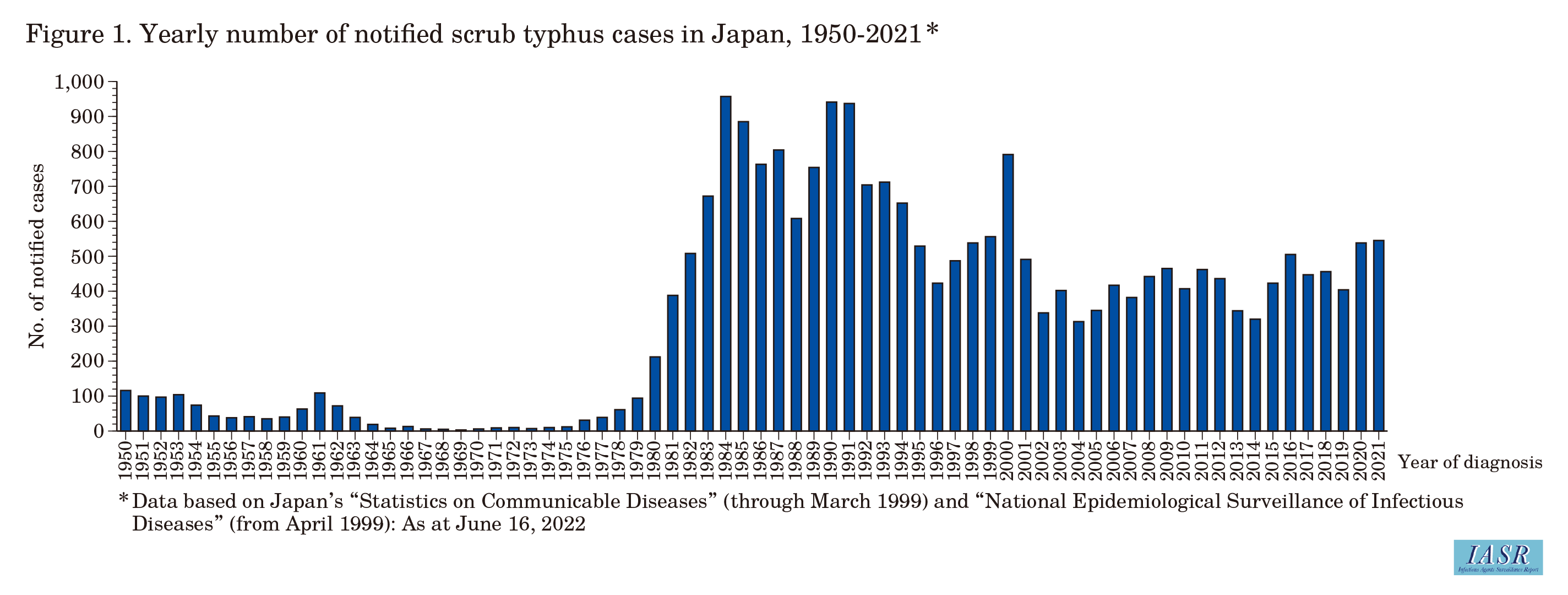
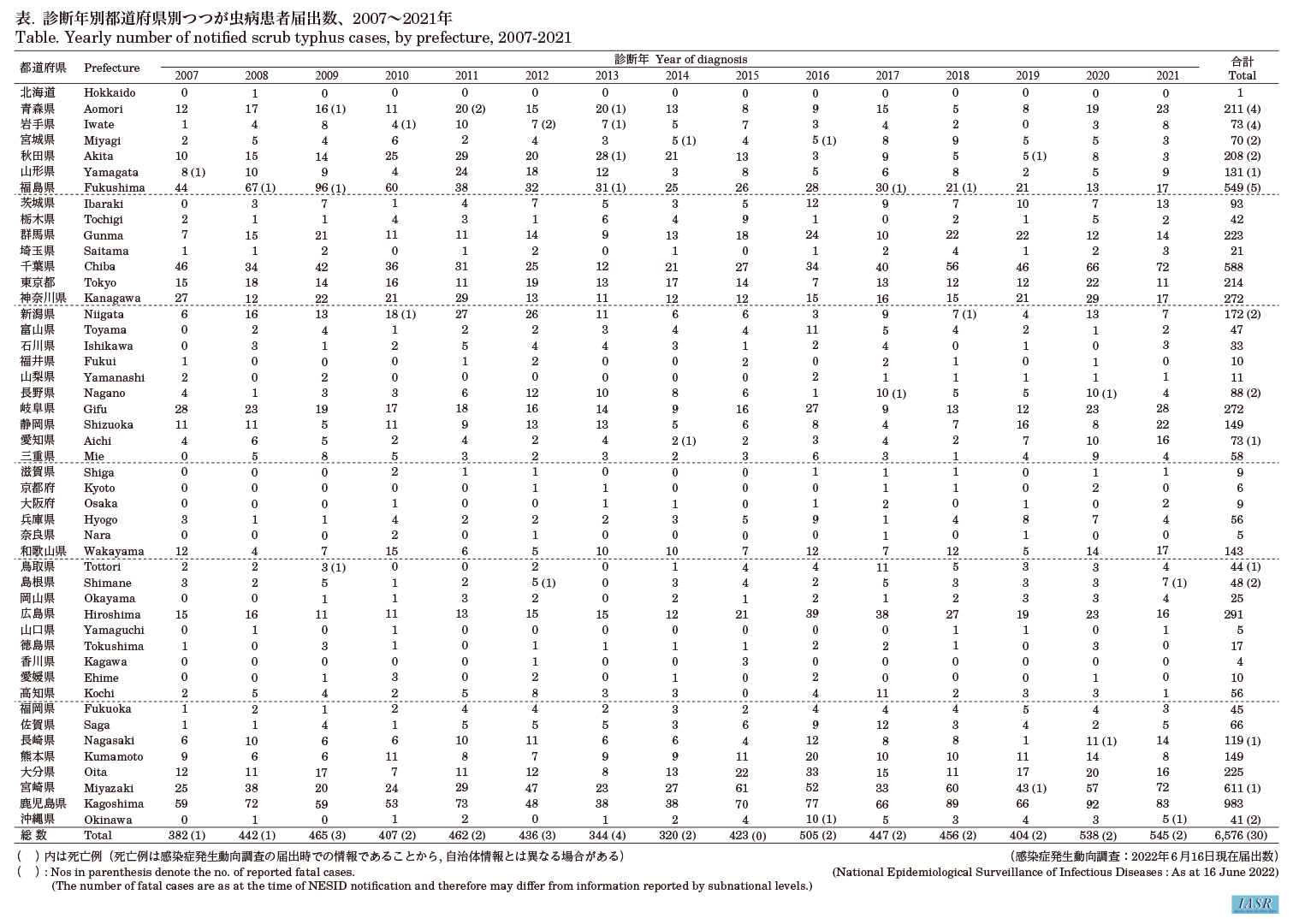
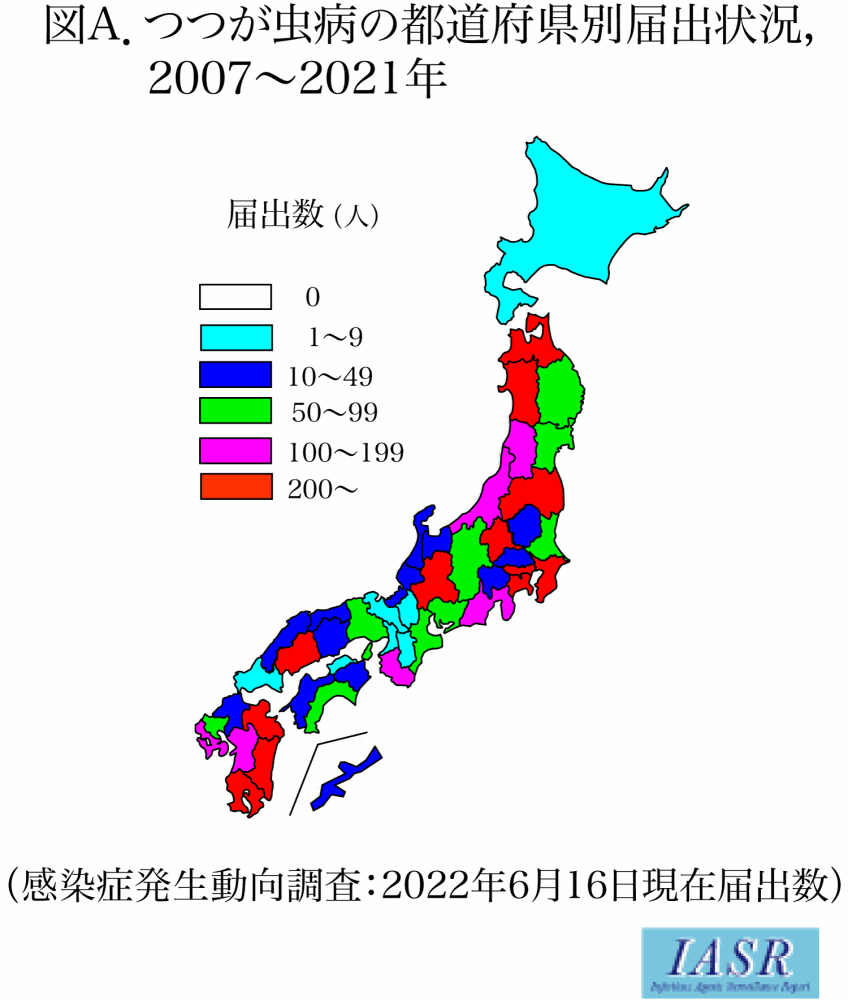
Since the NESID system was updated to the current system in 2006, 6,576 cases have been notified from 2007 to 2021. The presumed geographic site of infection was 6,520 cases in Japan, 26 cases overseas, and 30 unknown (see p.185 of this issue). As for case notifications by prefecture, Kagoshima Prefecture had the highest number of reported cases (average of 66 cases/year, ranging from 38 to 92), followed by Miyazaki, Chiba, and Fukushima Prefectures (Table and Fig. A: https://www.niid.go.jp/niid/images/iasr/2022/8/510tfa.gif).
In recent years, according to the NESID data, there have been two peaks in the number of reported cases by month, one in spring (March to May) and another in autumn to early winter (November to December) (Fig. 2). The timing of case-patient occurrence depends on the activity period of the larvae of the particular trombiculid mite species in its respective habitat. In regions where the cold-resistant L. pallidum is mainly distributed, case-patients occur during autumn to early winter after hatching but also show a peak in the spring from larvae that overwintered. On the other hand, the larvae of the cold-sensitive L. sctellale cannot overwinter; in these habitats, the number of case-patients peaks in autumn to early winter after the larvae hatch. In areas with little snowfall, such as Kagoshima and Miyazaki Prefectures, many outbreaks occur during autumn to early winter. In snowy areas, such as Aomori, Yamagata, and Niigata Prefectures in the Tohoku Region, case-patient reports increase in spring, but a small peak can also be observed in autumn to early winter. While located in the Tohoku Region, Fukushima Prefecture has a large peak of case-patients in the autumn (see p.177 of this issue). In the Hokuriku Region, including Toyama, Ishikawa, and Fukui Prefectures, most case-patients were notified in November and December, distinct from neighboring Niigata Prefecture. In the Chugoku Region, Hiroshima and Shimane Prefectures have clearly different case occurrence patterns, although they are adjacent to each other (see pp.181 and 182 of this issue) (Fig. 2 and Fig. B: https://www.niid.go.jp/niid/images/iasr/2022/8/510tfb.gif).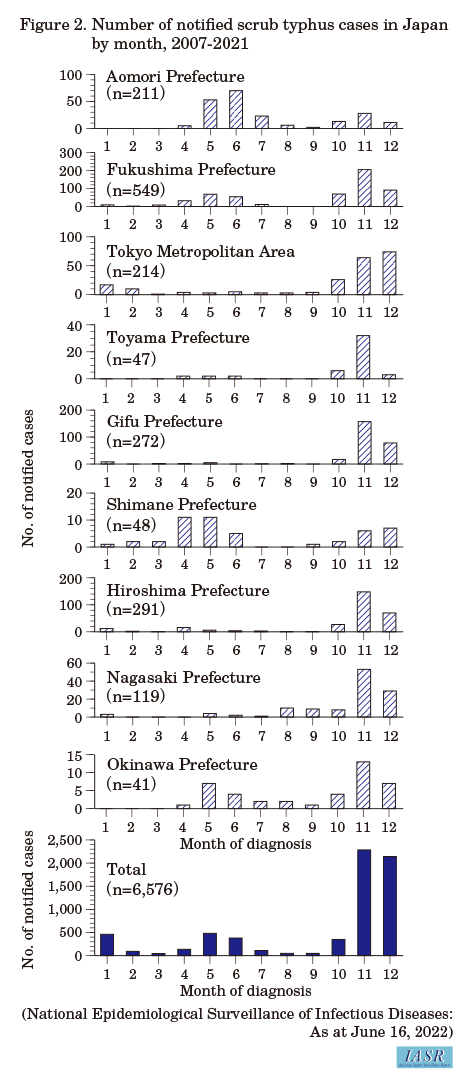
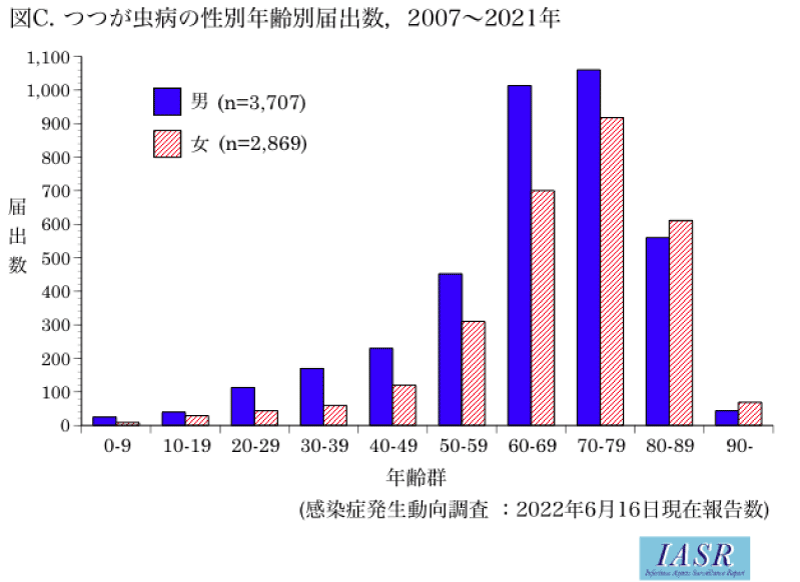
Sex and age distributions: Among the cases reported in 2007-2021, 3,707 cases were male (56%) and 2,869 were female (44%). Most case-patients were in their 60s or older, with a median age of 69 years (68 years for males and 71 years for females) (see Fig. C: https://www.niid.go.jp/niid/images/iasr/2022/8/510tfc.gif).
Symptoms and signs: According to records from the notification forms, during the period from 2007 to 2021 (n=6,576), there were 6,201 cases with fever (94%), 5,716 cases with rash (87%), 5,503 cases with eschar (84%), and 2,491 cases with headache (38%) (including cases with more than one sign/symptom). In addition, 154 cases with pneumonia (2%) and 40 cases with encephalitis (0.6%) were reported. At the time of notification, there were 30 fatal cases (0.5% of reported cases), 17 of which were reported from the Tohoku Region. Among the clinical signs not included in the notification form categories, platelet reduction, increased C-reactive protein, and increased liver enzymes were frequently observed in the blood data; while rashes on the palms and soles are seen in Japanese spotted fever, a disease requiring differentiation from tsutsugamushi disease, they are rare in tsutsugamushi disease (see p.186 of this issue).
Laboratory diagnosis: The diagnostic methods used for notified cases were serum antibody detection (5,268 cases, 80%), gene detection by PCR (1,516 cases, 23%) (specimen: 1,085 blood, 720 pathological tissue such as eschar), and isolation of pathogen (337 cases, 5%) (specimen: 314 blood, 18 pathological tissue) (including cases with more than one diagnostic method).
In recent years, gene detection by PCR has increased, but the measurement of serum antibody titer is still important because eschar, which is best suited for gene detection, cannot be found in some cases. The indirect fluorescent antibody test using antigens of the standard three serotypes, Kato, Karp, and Gilliam, is covered by health insurance and is possible at commercial diagnostic laboratories. In addition to standard antigens, some public health institutes also conduct tests using antigens of serotypes that are prevalent in their regions. However, caution is necessary for the selection of antigens for serodiagnosis, as the distribution of the Shimokoshi type, which has low cross-reactivity, has been confirmed not only in northern Japan but also in western Japan (see p.182 of this issue). In addition to the detection limit and false negatives of gene detection in acute phase materials, IgM antibodies cannot be detected in acute phase sera in many cases; therefore, antibody measurements using paired sera should not be overlooked.
Conclusion
Effective antibiotics of the tetracycline line are available for the treatment of rickettsial diseases such as tsutsugamushi disease. In recent years, it has become clear that various viral diseases transmitted by ticks, such as SFTS, which do not respond to antibiotics, exist in Japan. At the medical setting, it is important to understand the diseases that require differential diagnosis and actively disseminate information about diseases such as tsutsugamushi disease that are present in the area, along with region-specific features; doing so will lead to prompt medical consultation of the case-patient, which will help prevent severe and fatal cases.