


IASR 47(1), 2026【THE TOPIC OF THIS MONTH】Pertussis in Japan, as at November 2025
PDF download(PDF:538KB)
The topic of This Month Vol.47 No.1(No. 551)
Pertussis in Japan, as at November 2025
(IASR Vol. 47 p1-2: November 2025)
Pertussis is defined, in the notification criteria for physicians under the Infectious Diseases Control Law, as “an acute respiratory tract infection caused by Bordetella pertussis”. The main symptom is a characteristic, severe paroxysmal cough that persists for a prolonged period. In Japan, the adsorbed diphtheria-purified pertussis-tetanus-inactivated polio combined vaccine (DPT-IPV) has conventionally been administered as a routine immunization; however, from April 2024, DPT-IPV combined with the Haemophilus influenzae type b (Hib) vaccine (DPT-IPV-Hib) was introduced into the routine immunization program (see p.3 of this issue). Immunity induced by pertussis vaccination is estimated to wane over approximately 4-12 years, and previously vaccinated individuals may become infected with pertussis, although symptoms are often atypical. Individuals in close contact with unvaccinated children, such as family members, may become infected with pertussis, and pertussis infection in neonates and infants may result in severe disease. Overseas, as one of the preventive measures against pertussis in infants, the administration of the adult-type tetanus-diphtheria-acellular pertussis vaccine (Tdap; not approved in Japan) is recommended to adolescents and adults, including pregnant women (IASR 40: 14-15, 2019); however, in Japan, DPT vaccination can also be performed on a voluntary basis.
Under the Infectious Diseases Control Law, from 1 January 2018, pertussis became a notifiable Category V Infectious Disease, subject to mandatory notification of all cases (IASR 39: 13-14, 2018). Accordingly, cases reported to the National Epidemiological Surveillance of Infectious Diseases (NESID) are cases that have clinical features of pertussis and are, in principle, cases for which the diagnosis has been confirmed by laboratory diagnosis (the reporting criteria are available at https://www.mhlw.go.jp/bunya/kenkou/kekkaku-kansenshou11/01-05-23.html).
Laboratory diagnosis: Laboratory testing for pertussis includes bacterial culture testing, serological testing, and genetic detection testing (IASR 38: 33-34, 2017). Bacterial culture testing has high specificity; however, isolation and culture from clinical specimens are not easy, because it not only requires special culture media but also because B. pertussis grows slowly. For serological testing, antibody titers against pertussis toxin (PT) (anti-PT IgG) are used worldwide. In addition, in Japan, serological tests measuring IgM and IgA antibodies against B. pertussis were covered by health insurance in 2016, and immunochromatographic assays detecting B. pertussis antigens were covered by health insurance in 2021. Genetic detection testing has the highest sensitivity, and in Japan, in addition to the globally adopted real-time polymerase chain reaction (PCR) method, the highly specific B. pertussis loop-mediated isothermal amplification (LAMP) method, which was developed as a simpler and more rapid testing method than the real-time PCR method, as well as multiplex PCR testing methods that have been increasingly disseminated in recent years, are useful for diagnosis (see p.4 of this issue). It should be noted that pertussis testing methods have recommended periods for use depending on the time since disease onset, and for accurate diagnosis, it is important to use specimens collected at times appropriate for each testing method [for details, see the Pertussis Reporting Guidelines for Physicians based on the Infectious Diseases Control Law (Third Edition): Pertussis, https://id-info.jihs.go.jp/diseases/ha/pertussis/040/pertussis_guideline_20250326.pdf].
National Epidemiological Surveillance of Infectious Diseases: Weekly numbers of notified cases from 2018 to 2025 are shown (Fig. 1). In the previous issues on pertussis published in this journal (IASR 40: 1-2, 2019; IASR 42: 109-110, 2021), only cases that met the criteria of Pertussis Reporting Guidelines for Physicians based on the Infectious Diseases Control Law were extracted. In contrast, in this issue, all cases that had been notified and accepted as at the time of aggregation are included for analysis, and confirmation of whether the cases met the physician reporting guideline criteria was not performed. Therefore, the number of notified cases may not be consistent with that in the previous issues (for cases that met the physician reporting guideline criteria, see p.5 of this issue).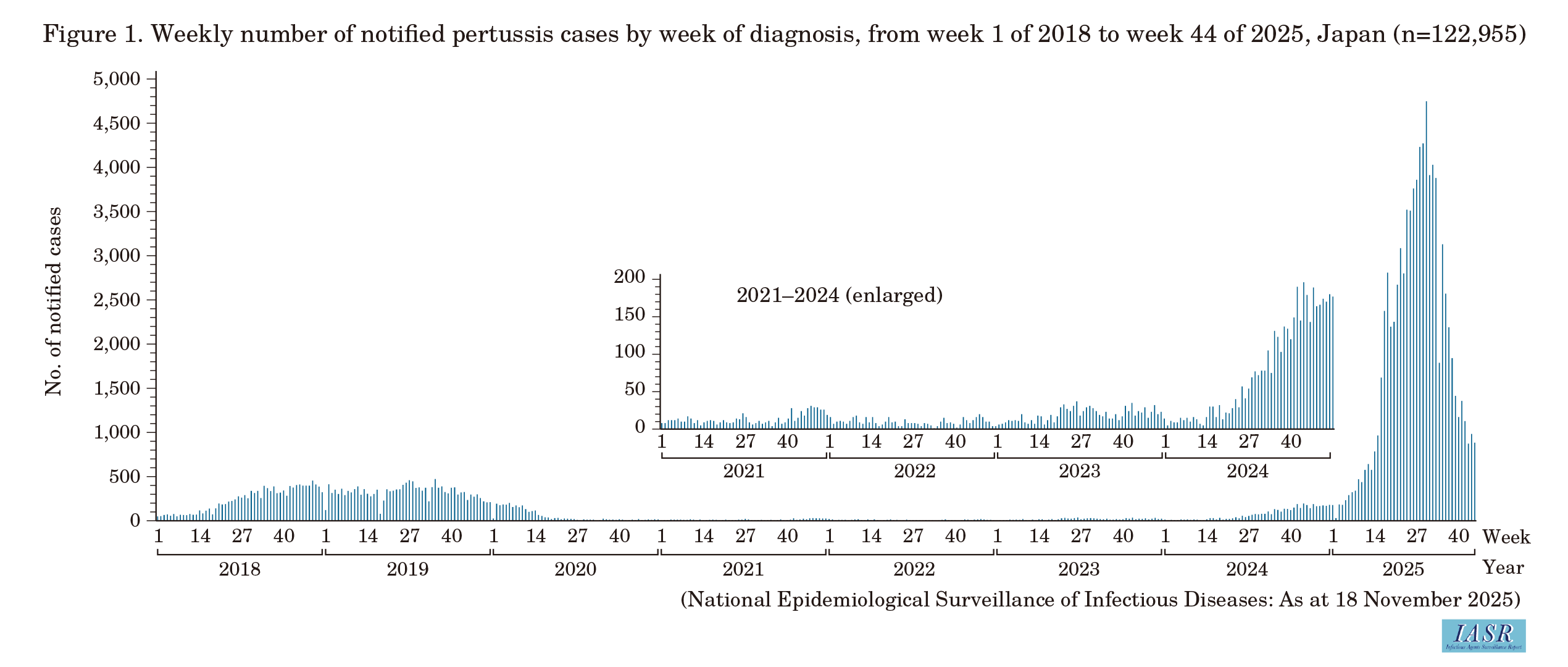
During the period from week 1 of 2018, when the mandatory notification of all cases was implemented, to week 44 of 2025, 122,955 cases of pertussis were reported to NESID. In 2018 and 2019, there were 12,118 and 16,847 notifications per year, respectively; however, during the coronavirus disease 2019 (COVID-19) pandemic in 2020-2023, the annual number of notifications remained at fewer than 3,000 cases. However, since the latter half of 2024, the number of pertussis notifications has increased, and in 2025, the number of notifications in weeks 1-44 reached 84,911 cases, which far exceeded the annual numbers of notifications in previous years. The trend of a decrease in the number of pertussis notifications during the COVID-19 pandemic and a subsequent rapid increase has been observed not only in Japan but also in countries worldwide (see p.7 of this issue).
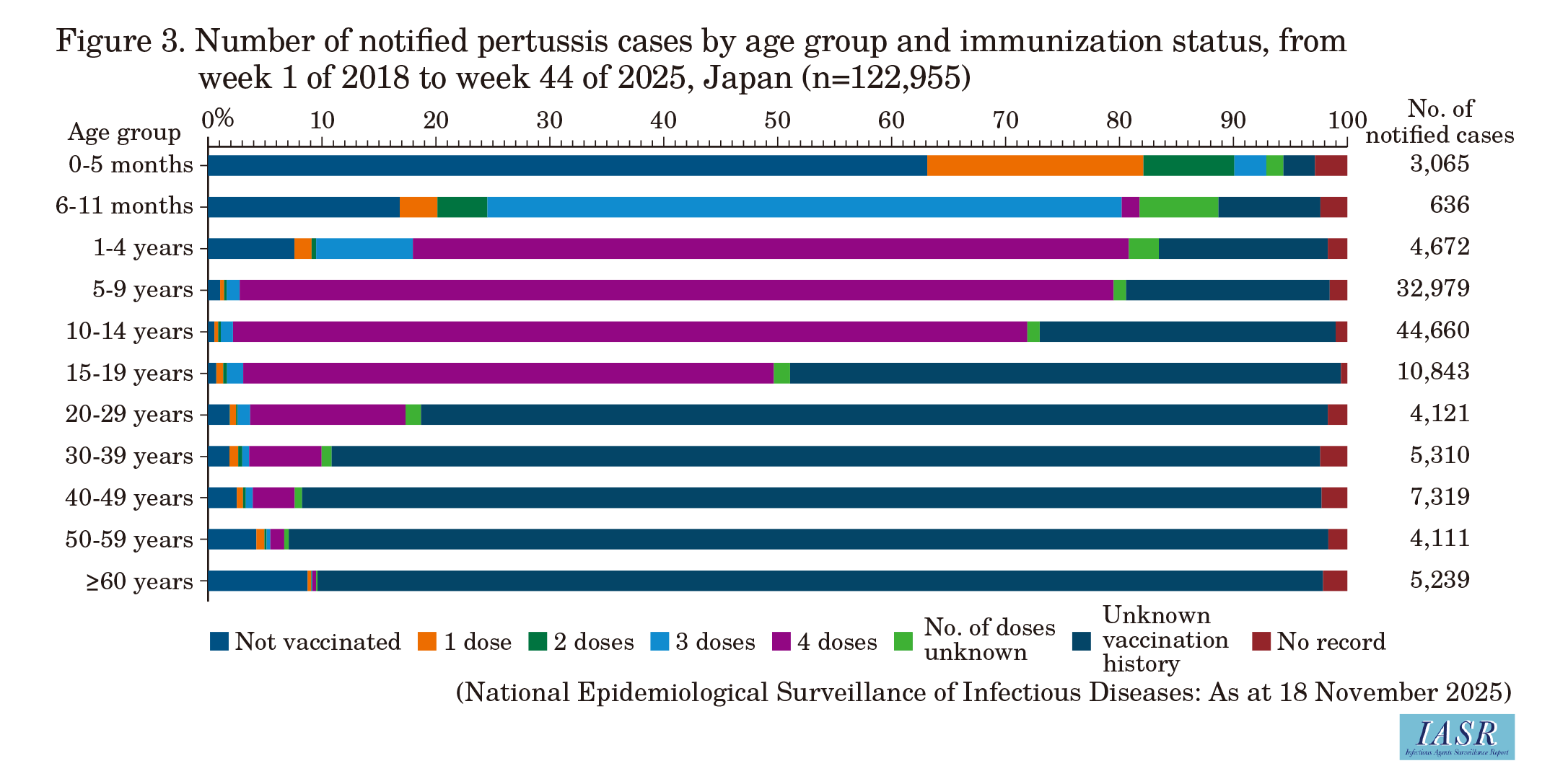
By age group, in 2024 and 2025, the proportion of notified cases among adolescents (age 10-19 years) increased substantially (Fig. 2). Among the patients notified during 2018-2025, the number of infants younger than 6 months, who are considered particularly prone to severe disease when infected with pertussis, was 3,065 (2.5%). Among cases aged 1-14 years, approximately 60-70% had a history of four doses of vaccination, whereas among cases aged 1-4 years, an age group that is assumed to have received at least one dose of routine immunization, just under 10% had no vaccination history (Fig. 3).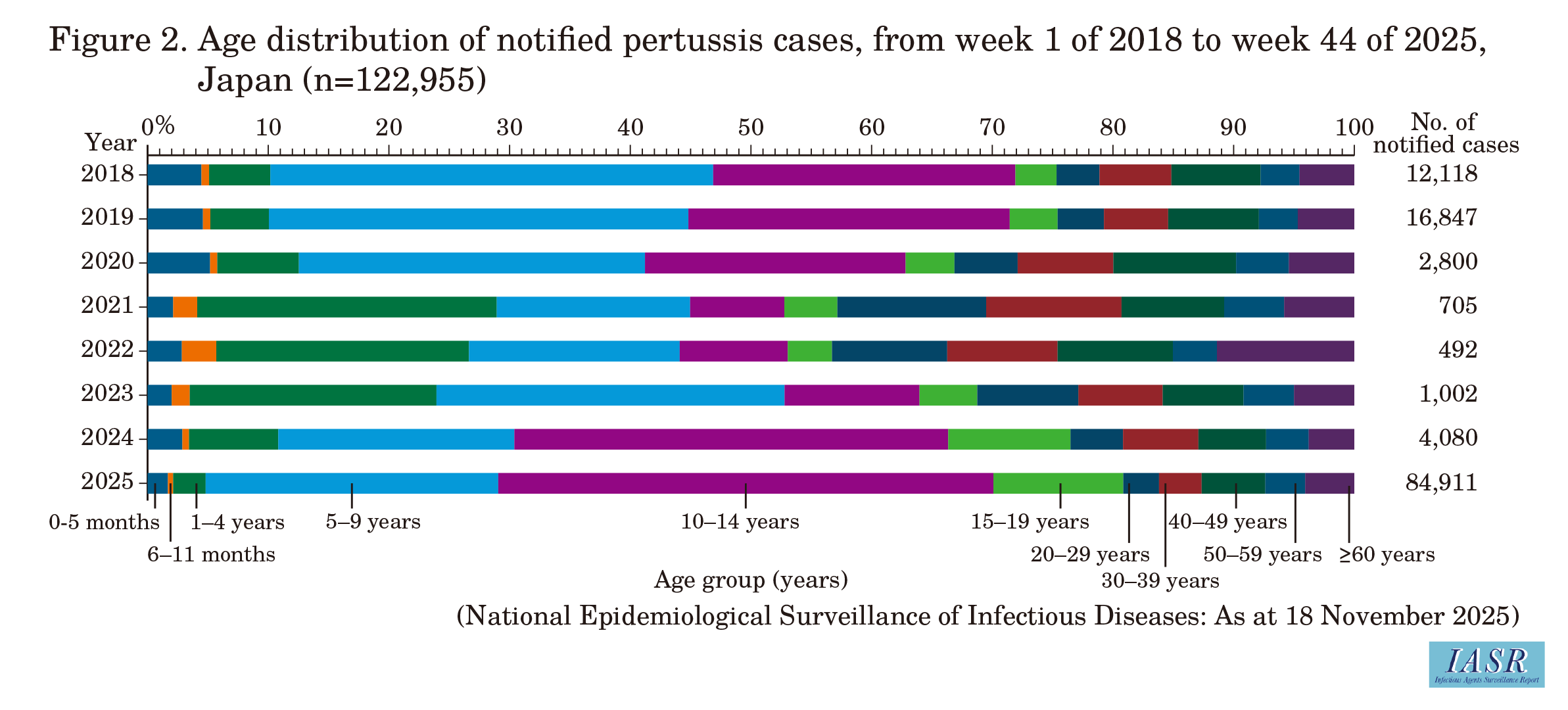
Among the patients notified in weeks 1-44 of 2025, the number of cases that met the physician reporting guideline criteria was 83,793, and among cases for which the route of transmission was ascertained, the majority were household infections due to contact with siblings, fathers, or mothers (see p.5 of this issue).
Pertussis seroprevalence in the Japanese population: According to the fiscal year (FY) 2023 National Epidemiological Surveillance of Vaccine-Preventable Diseases (NESVPD), the seroprevalence of antibodies against pertussis toxin (PT) of B. pertussis was nearly 100% at age 0-5 months and approximately 90% at age 6-11 months (https://id-info.jihs.go.jp/surveillance/nesvpd/graph/2023/pertussis/year/index.html). However, thereafter, the seroprevalence declined, and at ages 8, 9, 12, and 17 years, it was below 30%. In addition, in FY 2023, compared with previous surveys (FY 2013 and 2018), not only did the seroprevalence after school age generally decline, but an increasing trend in antibody titers with age was also not clearly observed.
The pathogen of pertussis and its molecular epidemiology: B. pertussis is broadly classified into the ptxP1 lineage and the ptxP3 lineage, according to genetic polymorphisms in the promoter region (ptxP) of the PT gene. In recent years, it has been reported that epidemic strains of B. pertussis have shifted from the formerly predominant ptxP1 lineage to the ptxP3 lineage (see p.8 of this issue). Furthermore, macrolide-resistant B. pertussis (MRBP), which is resistant to macrolide antibiotics that are the first-line drugs for treatment, has also been recognized as a concern in Japan, and knowledge regarding testing methods for MRBP has been updated (see p.9 of this issue). Furthermore, the importance of treatment based on pathogen testing has also been pointed out (see p.10 of this issue). It remains important to continue analysis of clinical isolates (see pp.13, 14, and 16 of this issue) and monitoring of MRBP.
Conclusion: Through the mandatory notification of all cases to NESID starting on 1 January 2018, detailed epidemiological information on notified pertussis patients, such as age distribution, symptoms, and vaccination history, has become available. In addition, pertussis has been designated as a target disease under the Guidelines on Prevention of Specified Infectious Diseases for Acute Respiratory Infections (ARI), promulgated on 10 November 2025 (see p.17 of this issue), and it is hoped that, in addition to strengthening the basis for ARI countermeasures in Japan, further promotion of the consideration and implementation of pertussis prevention and control measures will be achieved.